01
eCharging Planner
[POC]
Designing a new way to navigate a complex EV charging ecosystem
From a collection of charging tools to a standalone planning experience, with an AI Assistant designed to help users find the right solutions for their needs.
Product design · UX strategy · Information architecture · Interaction design · AI experience design · Prototyping · Validation
My Role
From defining the experience to shaping the product
I took ownership of the eCharging Planner experience from early concept through to its first public showcase at IAA Transportation.
The project started in May as my main assignment within the team, with a three-month timeframe to bring the product to a presentable state.
My responsibility went beyond interface design. I had to understand the logic behind multiple existing EV tools, define how they could work together, challenge initial product assumptions and create a scalable experience around them.
Alongside the design work, I continuously aligned with the Product Owner, Product Manager, business stakeholders and development team, while incorporating a Design Leadership review into my own roadmap.
A significant part of my role was also shaping the AI Assistant from concept to interaction model, turning an initially proposed questionnaire-based journey into a conversational experience.
Role
Product Designer
Ownership
End-to-end product design
Timeline
~3 months / May to IAA Transportation
Collaboration
Product · Engineering · Business · Design Leadership
Focus
UX strategy · Information architecture · AI experience · Prototyping · Validation
Context and Problem
A complex ecosystem was becoming a single experience.
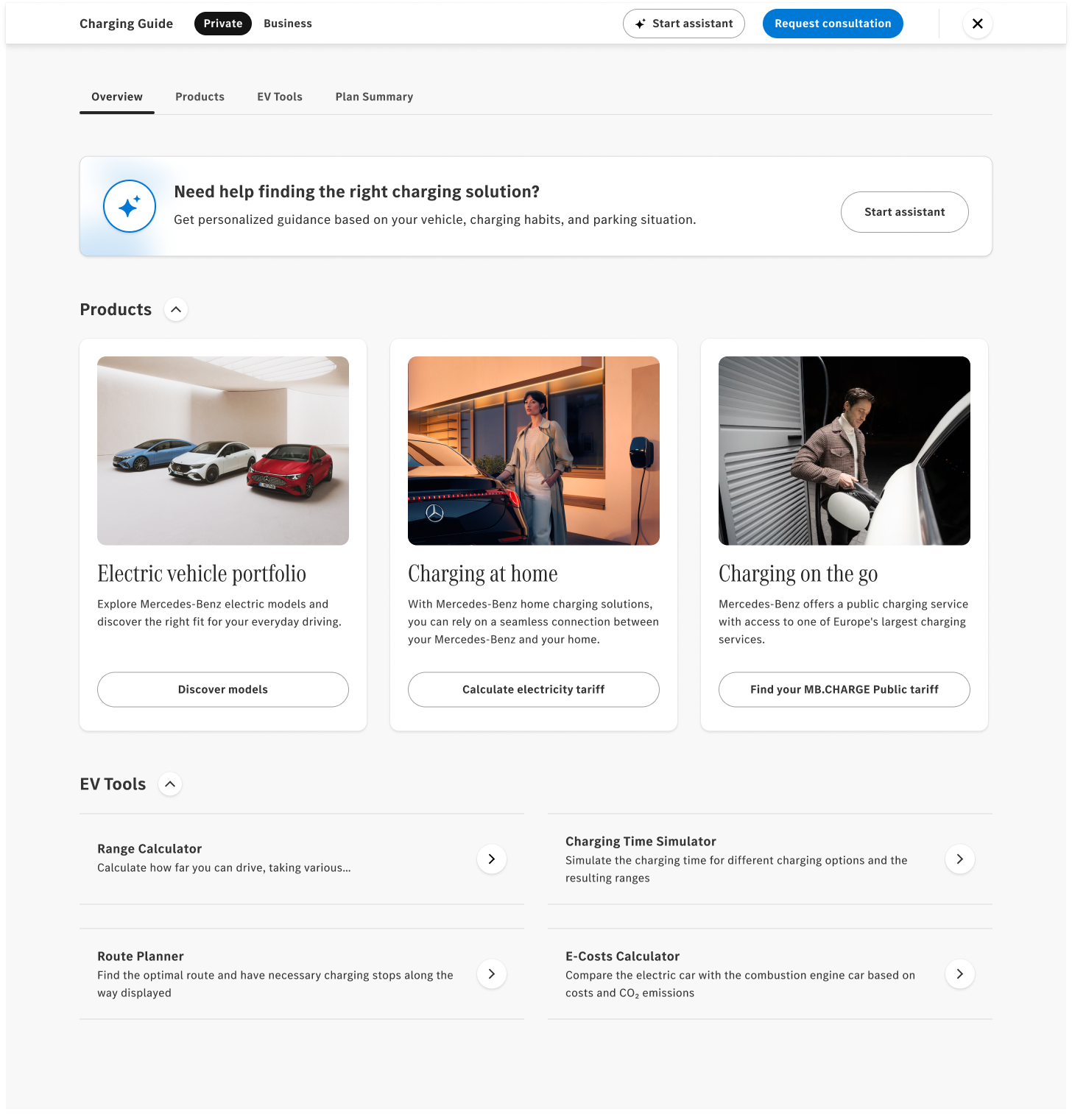
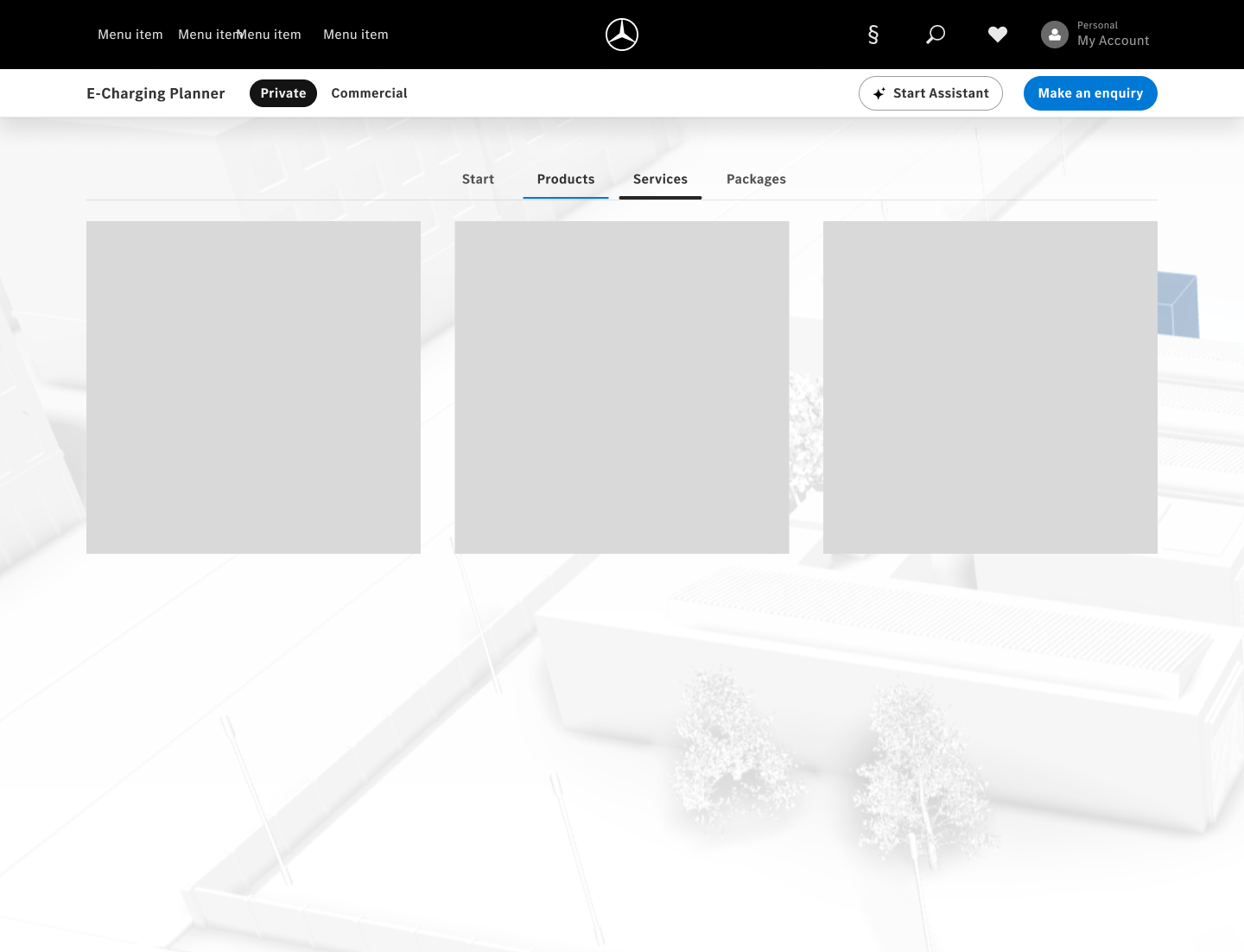
The eCharging Planner brings together multiple EV and charging tools that previously existed as separate experiences.
The challenge was not simply to put these tools under one interface.
Users needed to understand:
What is this?
Where should I start?
Which products are relevant to me?
How are the different tools connected?
What exactly am I building?
What happens next?
At the same time, the product needed to support different audiences and evolve as new products and services were introduced.
How might we turn a complex ecosystem of EV products and charging tools into one clear, scalable planning experience?
Designing within real constraints
The experience had to evolve quickly, without losing coherence.
I had three months to take the product from concept towards a public showcase.
At the same time, the design had to move through multiple layers of alignment and evaluation.
A compressed
timeline
The product needed to be ready for presentation at the IAA Transportation within three months.
A growing
ecosystem
I had to understand the purpose, logic and dependencies of multiple existing EV tools before defining how they should work together.
Multiple decision-makers
Product, business, development and design leadership all had different concerns and expectations.
Design Leadership review
The design review was not an additional phase after the project, I had to incorporate it into my own roadmap and deliverables.
This meant making decisions quickly while creating enough structure for those decisions to remain scalable.
What I found
The initial brief didn't fully solve the underlying problem
As the experience evolved, several initial assumptions became opportunities to challenge the direction of the product.
Users were not simply looking for another collection of tools.
They needed clarity, guidance and a reason to understand how the pieces fit together.
01
The experience needed a clearer starting point
Different users could arrive with very different needs. A single linear journey risked becoming restrictive.
02
The tools needed to feel connected
Individual tools could work well independently, but their relationship was not always clear when placed within a broader experience.
03
Guidance needed to become contextual
Users might need help understanding what to choose, but not necessarily through a rigid sequence of questions.
This became particularly important when defining the AI Assistant.
Challenging the brief
I didn't treat the initial requirements as fixed.
Through exploration and stakeholder discussions, I challenged several assumptions about how the experience should work.
From executing requirements to shaping the product
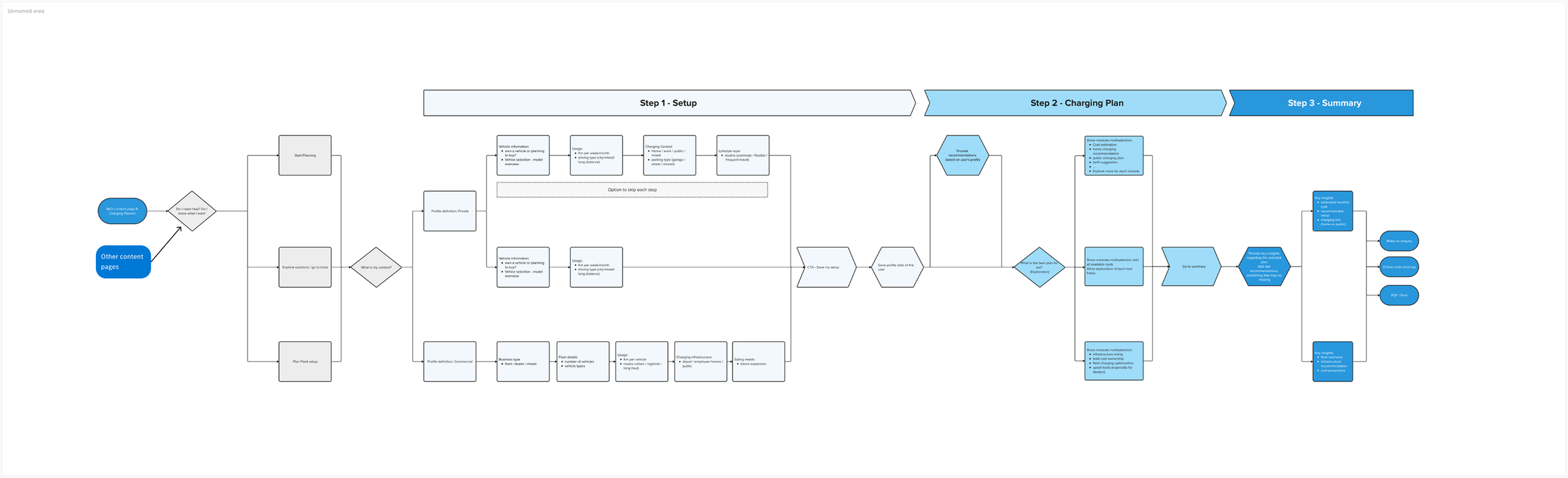
The initial direction
A guided questionnaire
Different users could arrive with very different needs. A single linear journey risked becoming restrictive.
The opportunity
A fixed questionnaire could guide users through a predefined path, but it would also limit the kinds of questions they could ask and the situations they could address.
I proposed exploring a more flexible interaction model.
The outcome
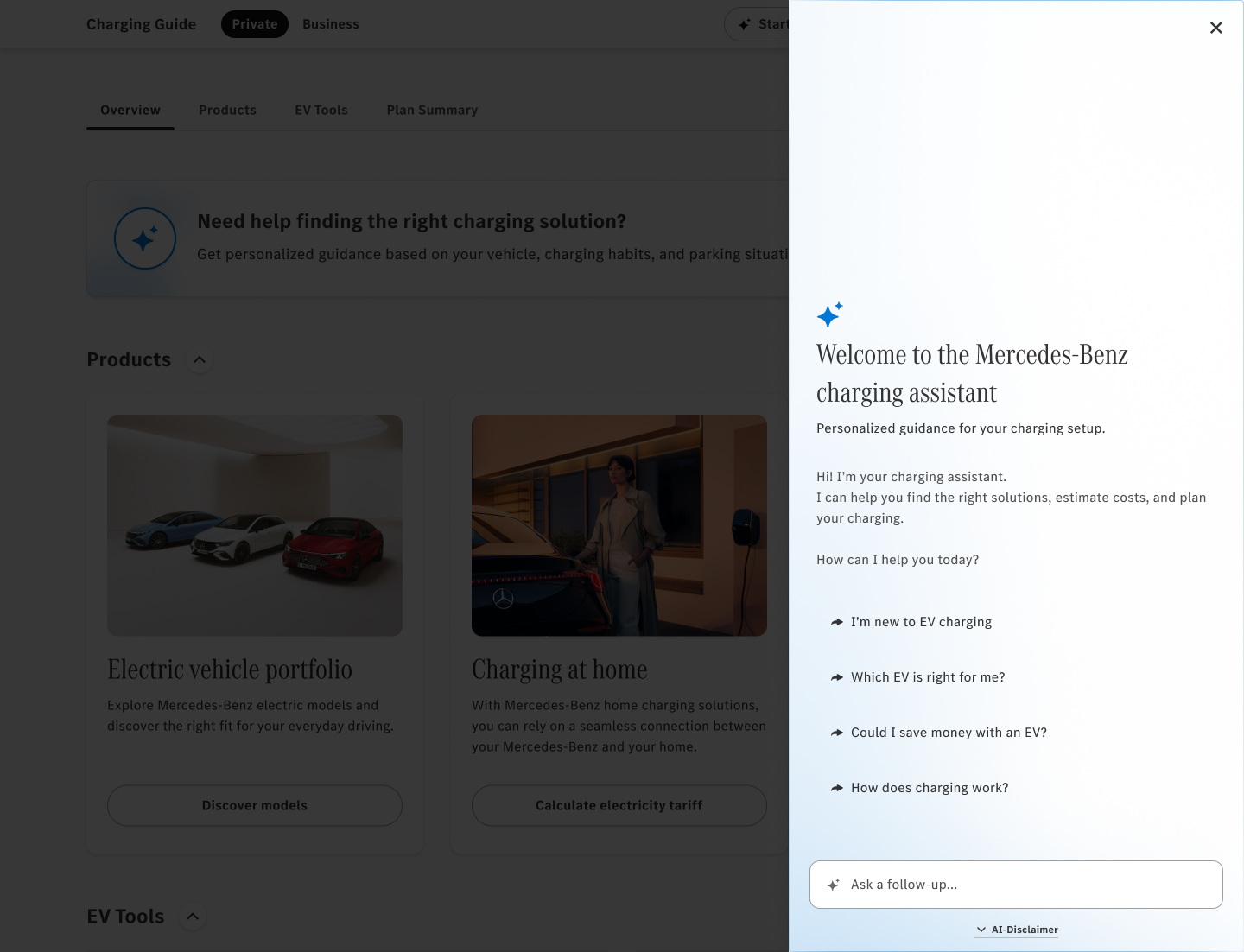
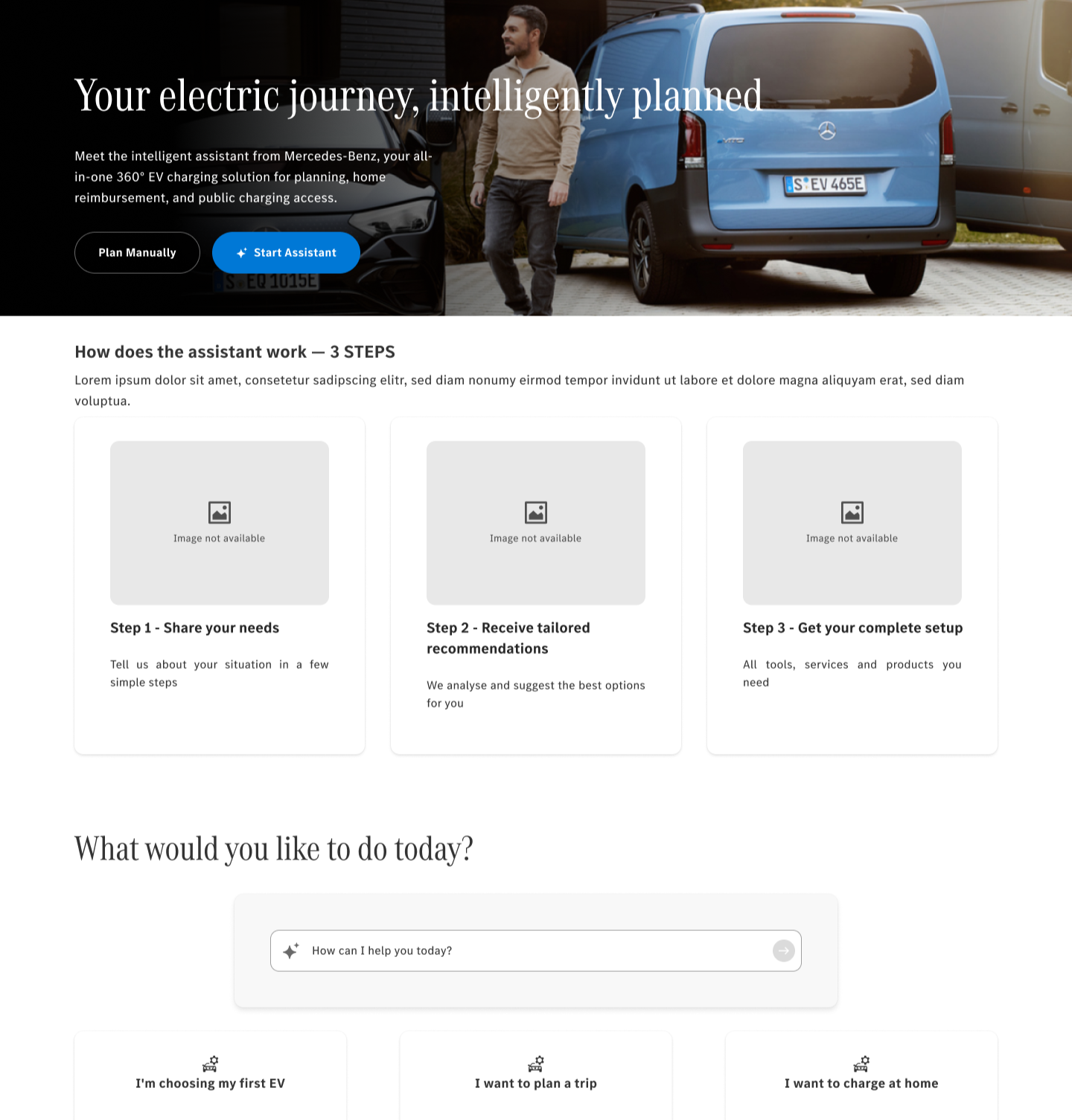
An AI Assistant
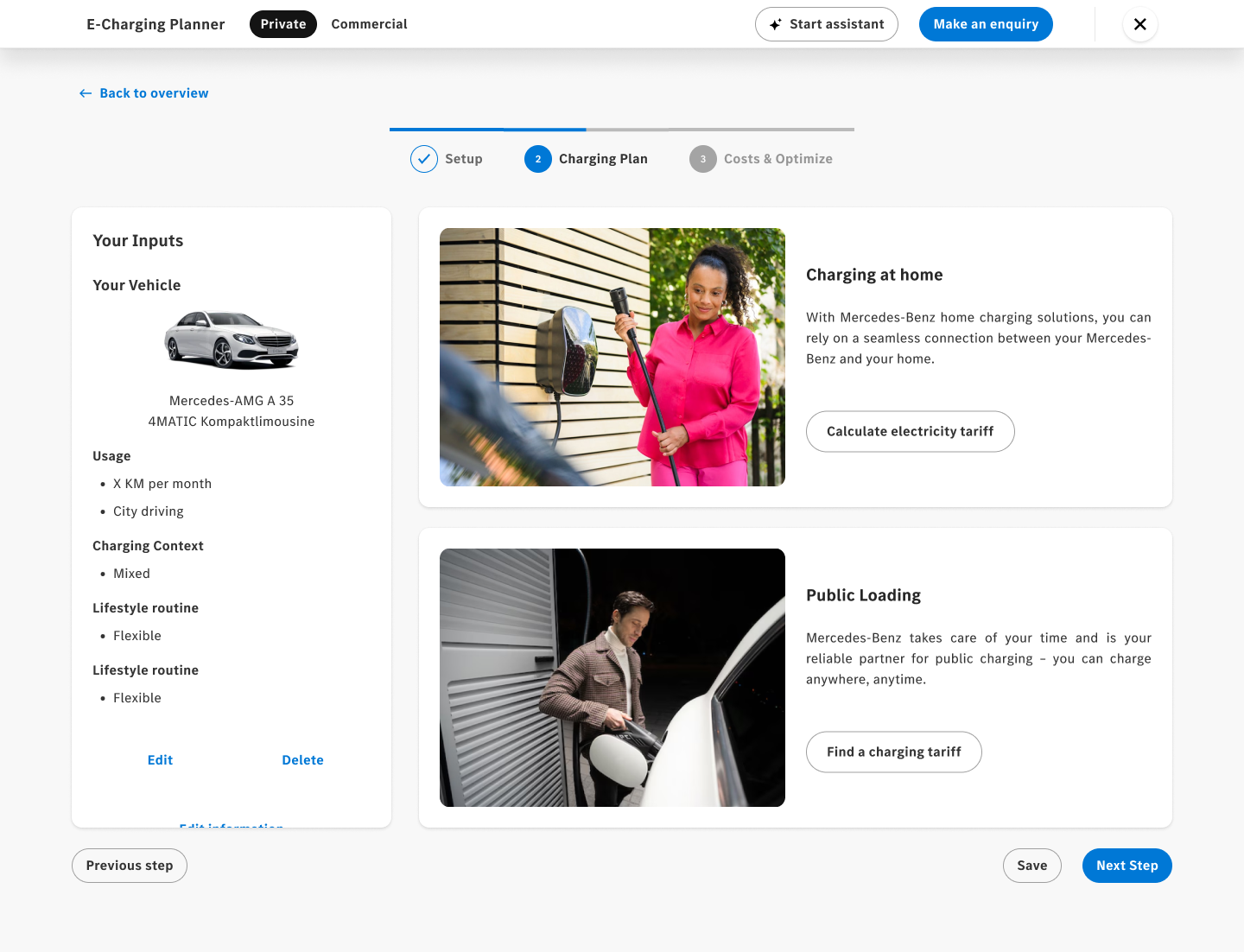
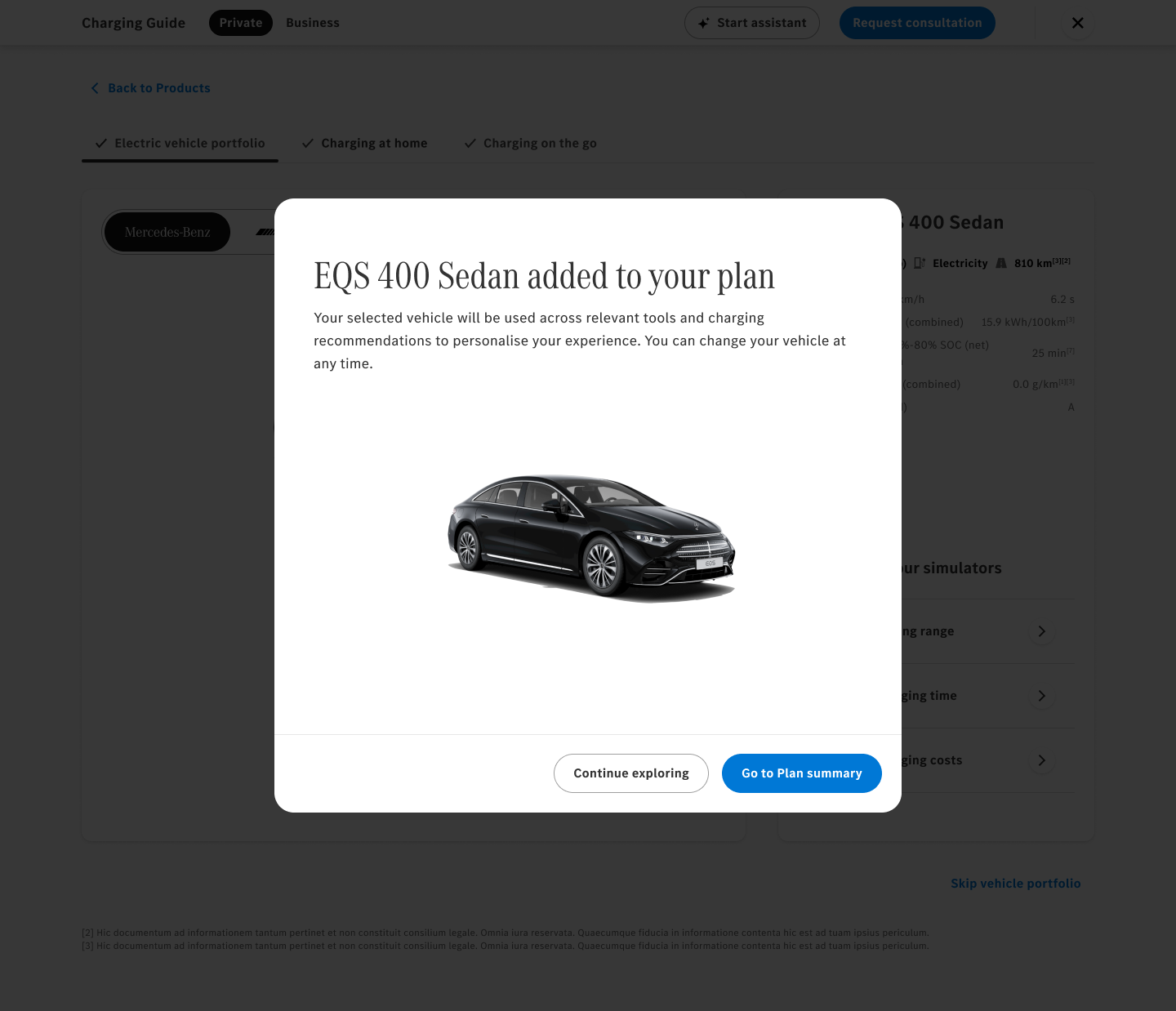
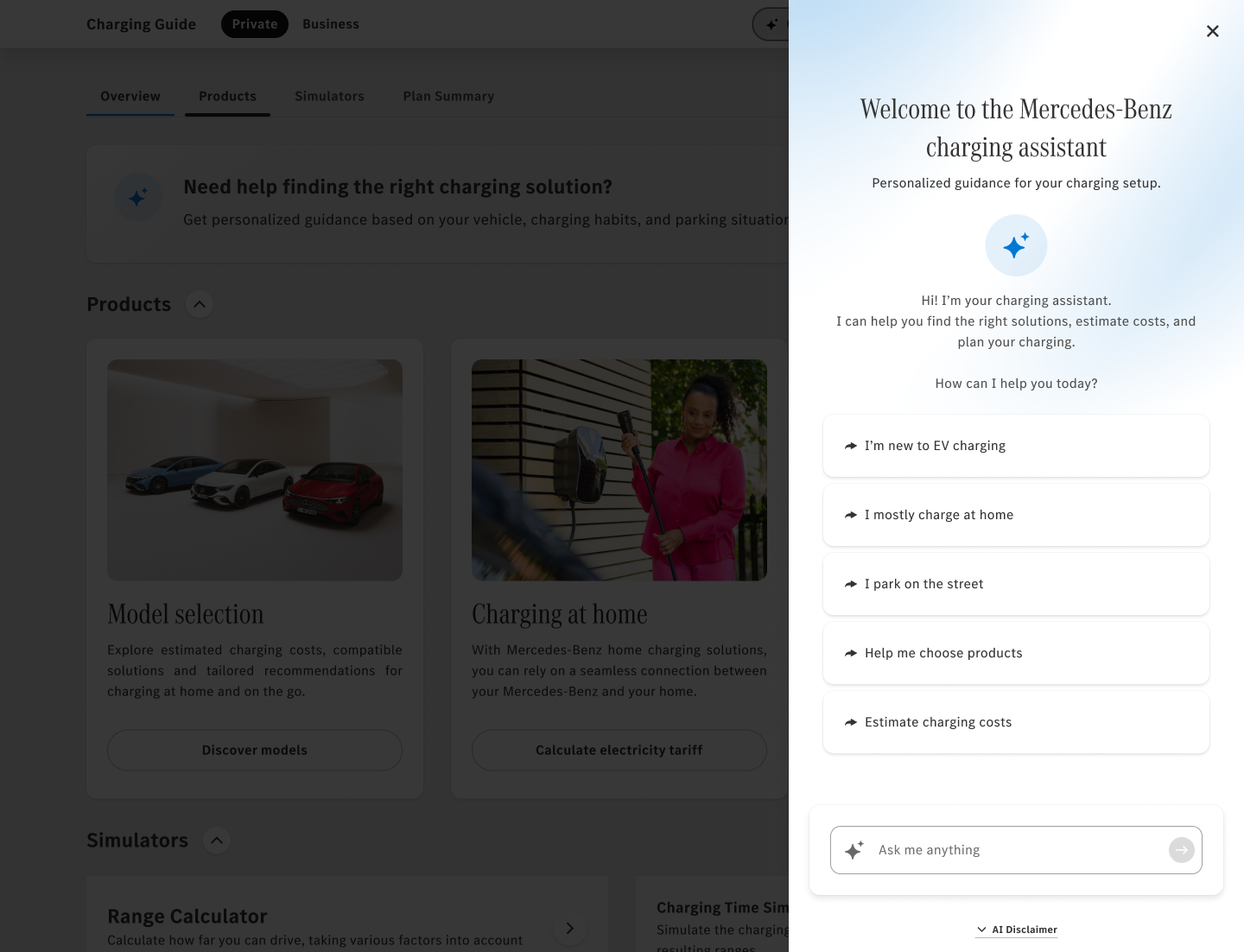
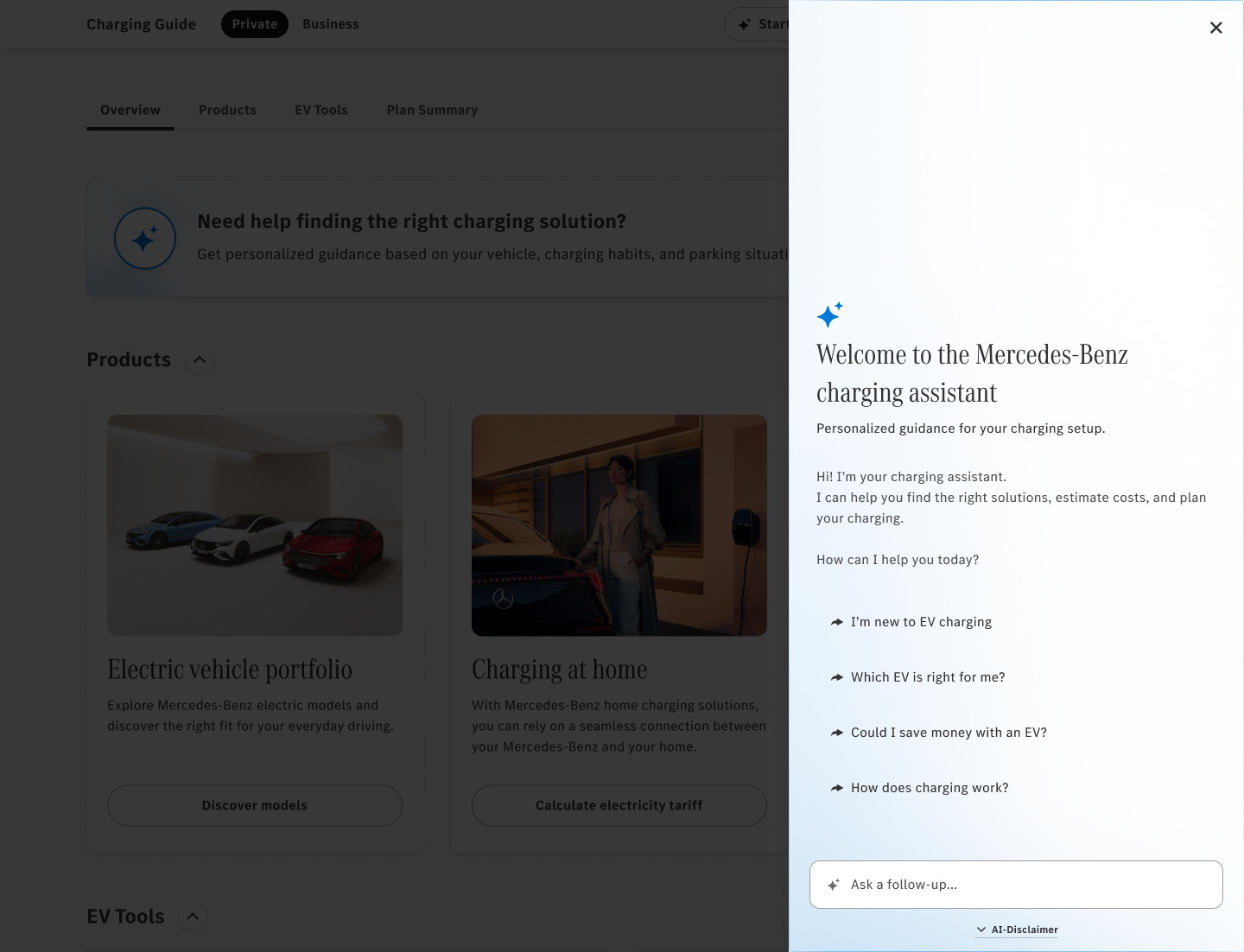
Instead of forcing users through a fixed sequence, the Assistant could understand questions in context and provide personalised guidance based on the user's vehicle and charging situation.
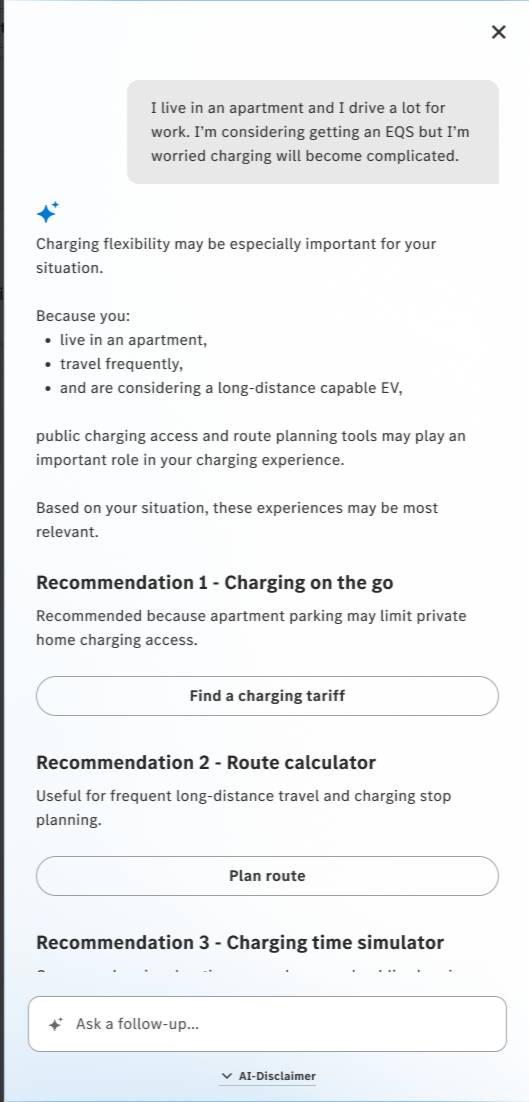
From embedded experience to standalone product
Challenging the way the product should exist
There was a second major product decision.
The initial direction was closer to an embedded experience within an existing platform, inspired by approaches such as Toyota's EV customer journey.
I questioned whether this model would provide enough space for the breadth of tools and journeys we were bringing together.
The product was becoming more than a guided entry point.
It was becoming an ecosystem in its own right.
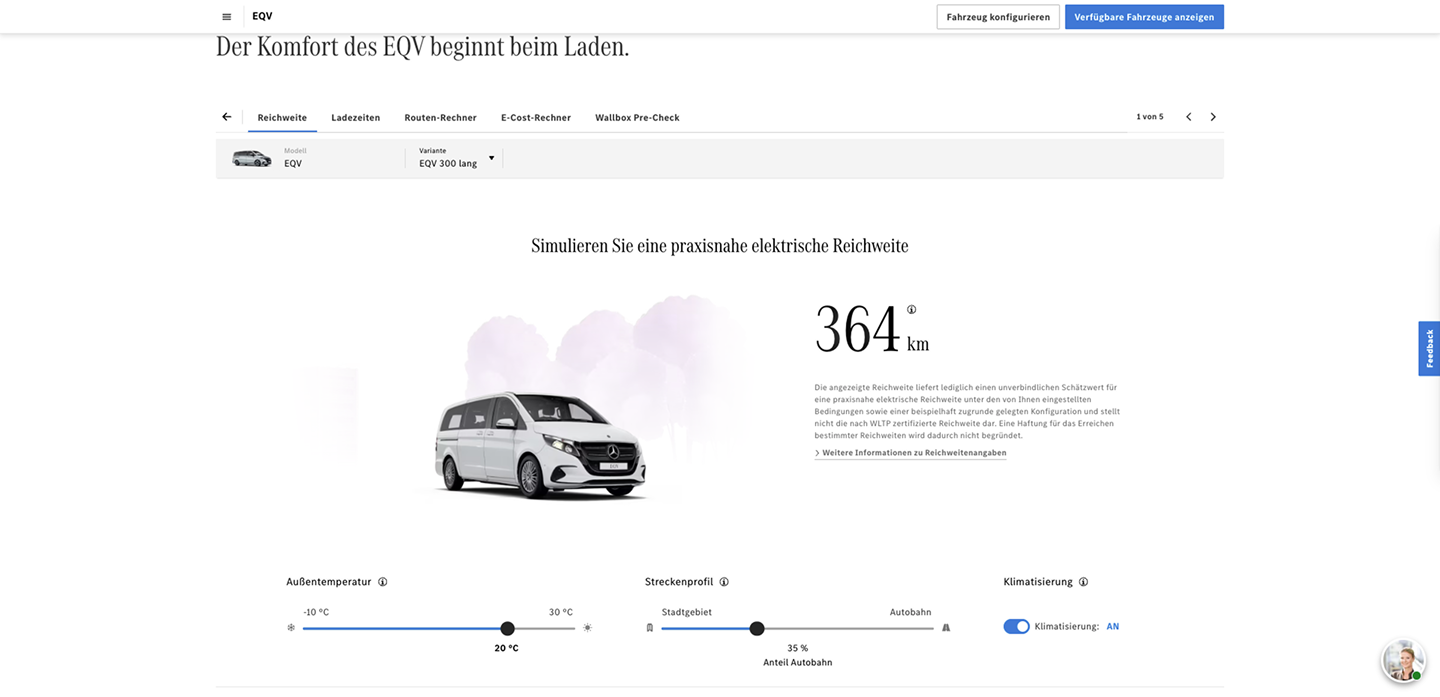
The decision
Move from an embedded experience to a standalone platform
This allowed the eCharging Planner to:
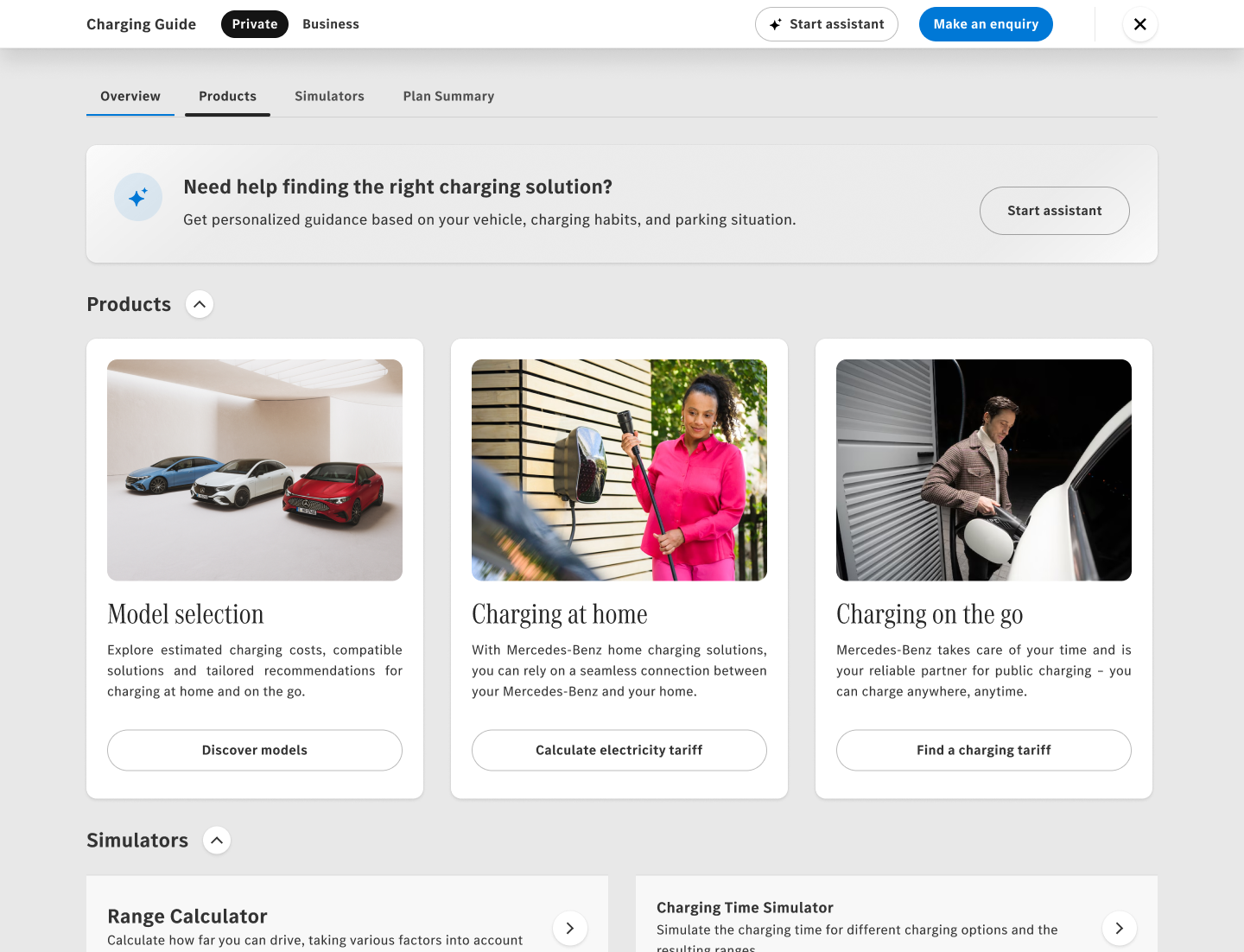
bring multiple products together under one experience
create its own information architecture
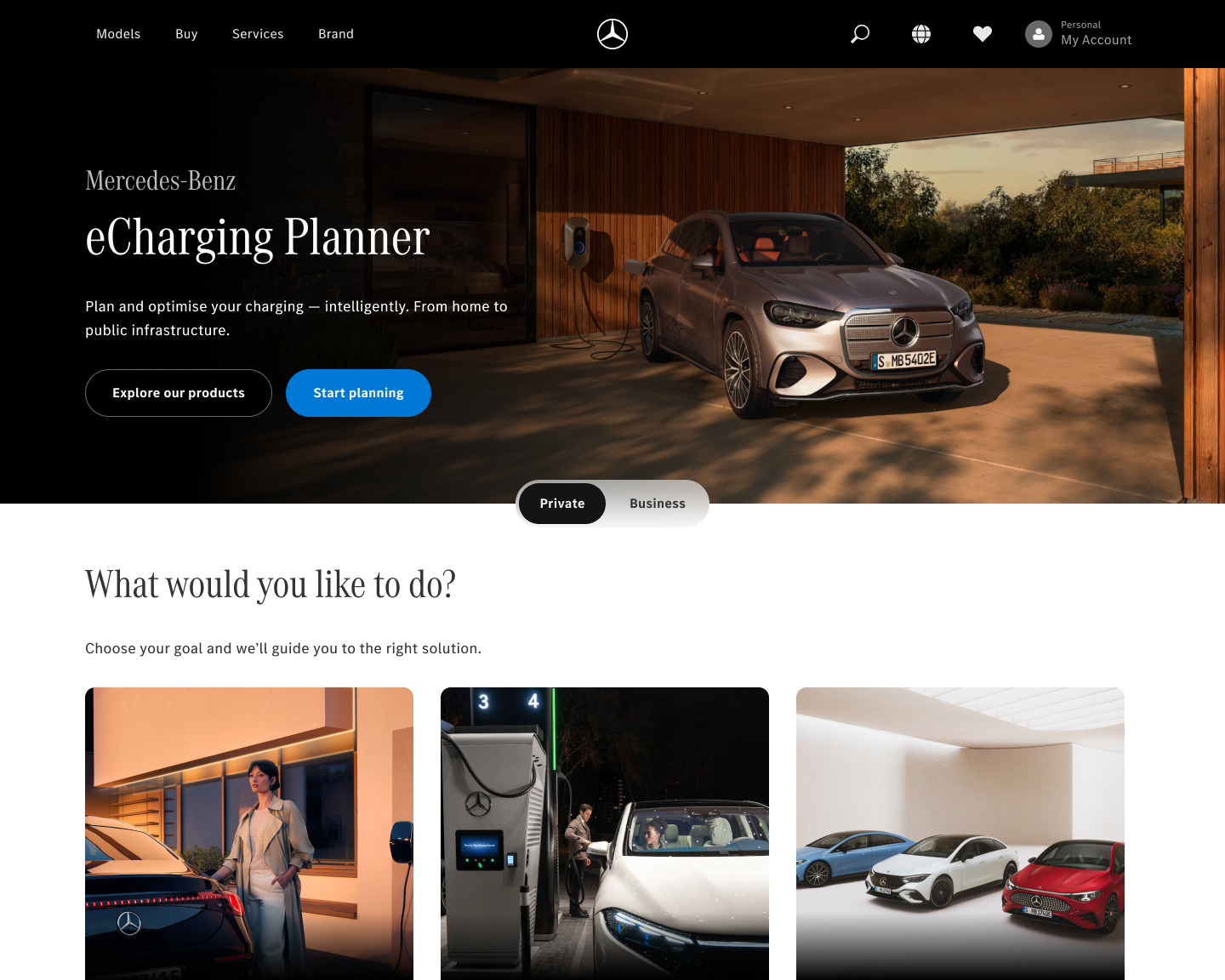
support different entry points
introduce the AI Assistant as part of the experience
create a scalable foundation for future tools
The shift was not simply visual. It changed the product strategy.
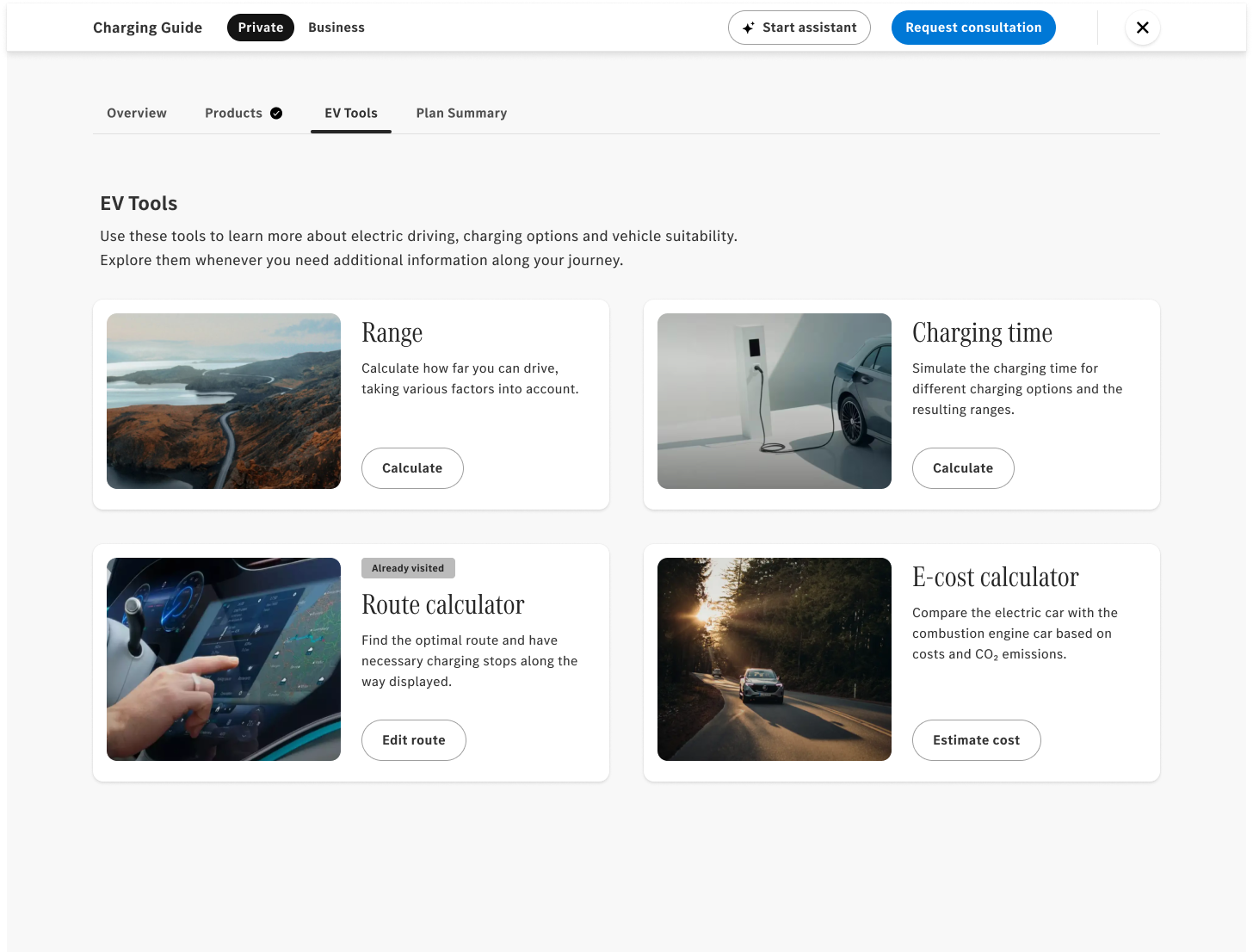
The product direction was not defined in isolation. Each major decision had to balance user needs, business expectations, technical constraints and the existing Mercedes-Benz ecosystem.
01
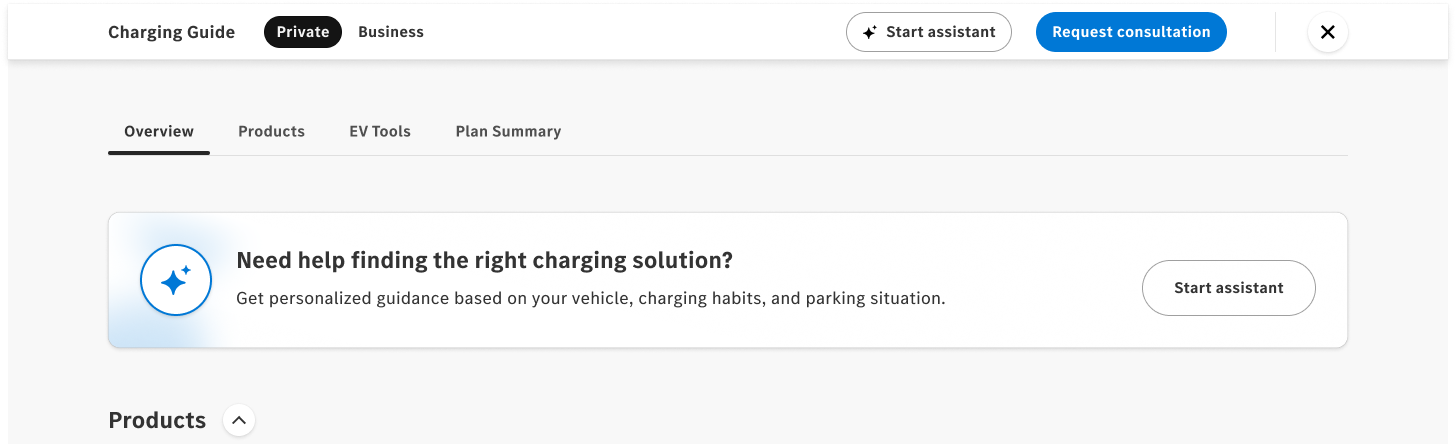
Create a clear entry point
The experience needed to explain what the eCharging Planner is before asking users to make decisions.
I introduced clearer entry points around user needs rather than simply exposing the available tools.
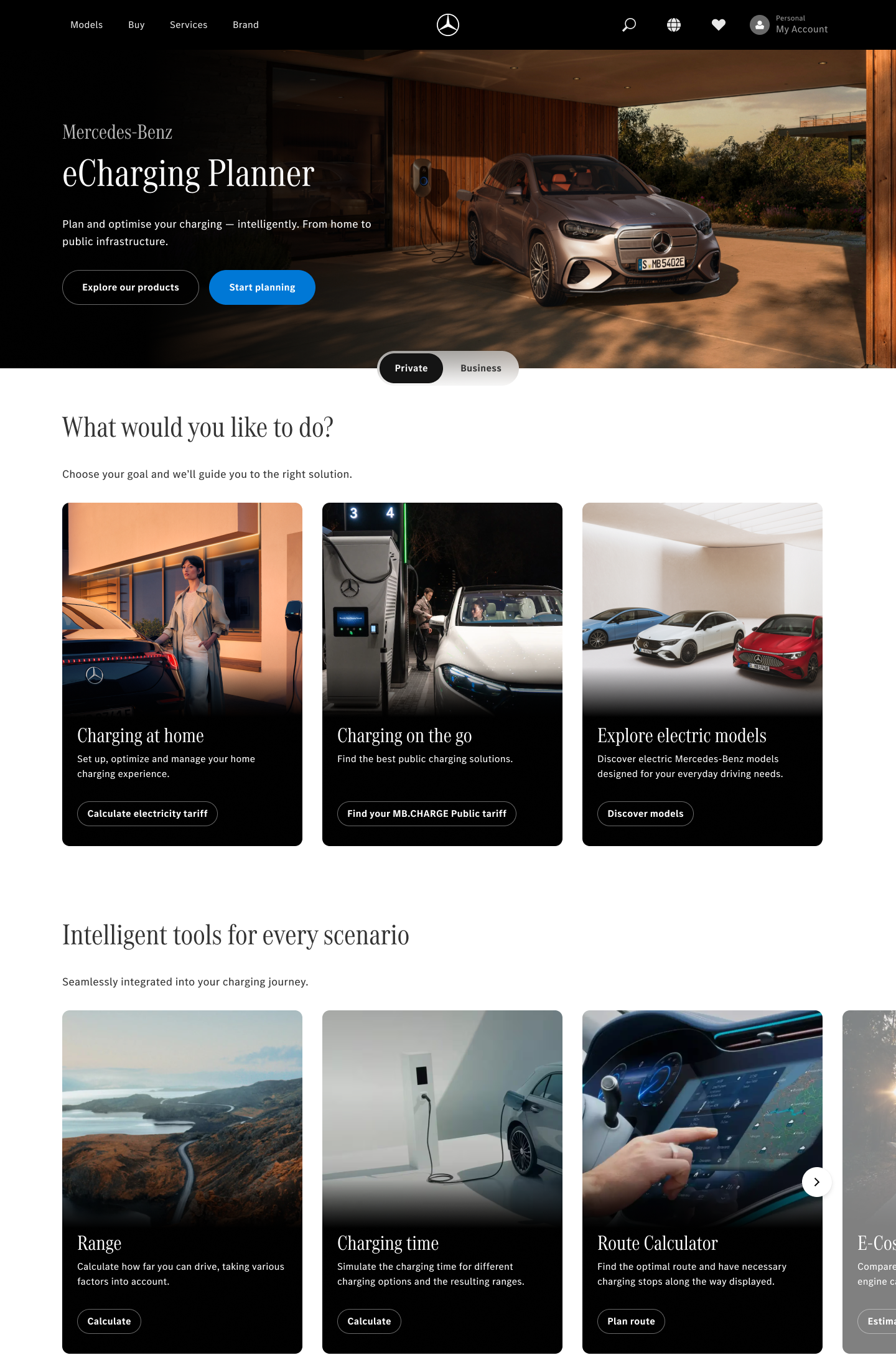
02
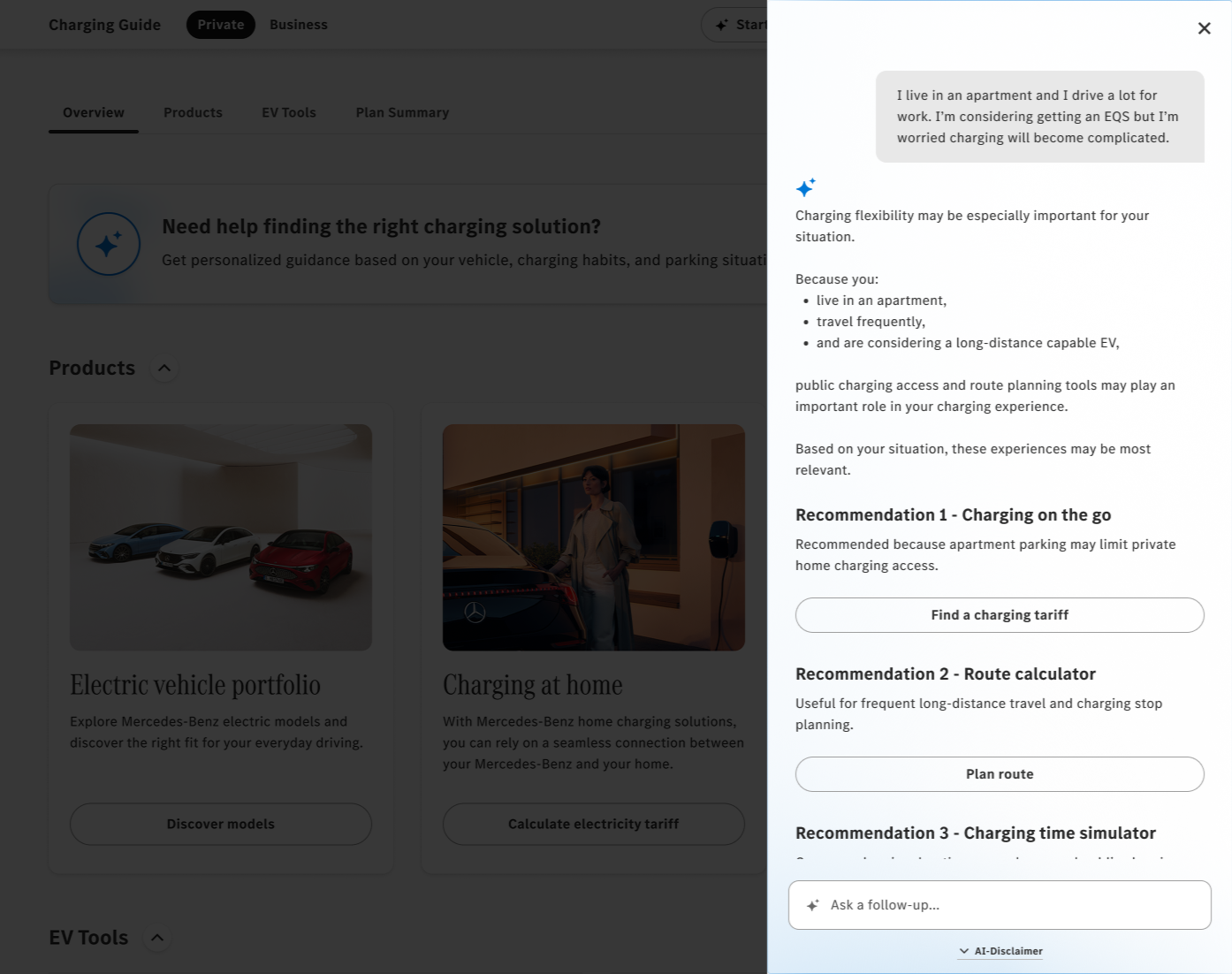
Replace a rigid journey with contextual guidance
The original questionnaire concept was redesigned into an AI Assistant that could support questions around the user's individual EV and charging situation.
03
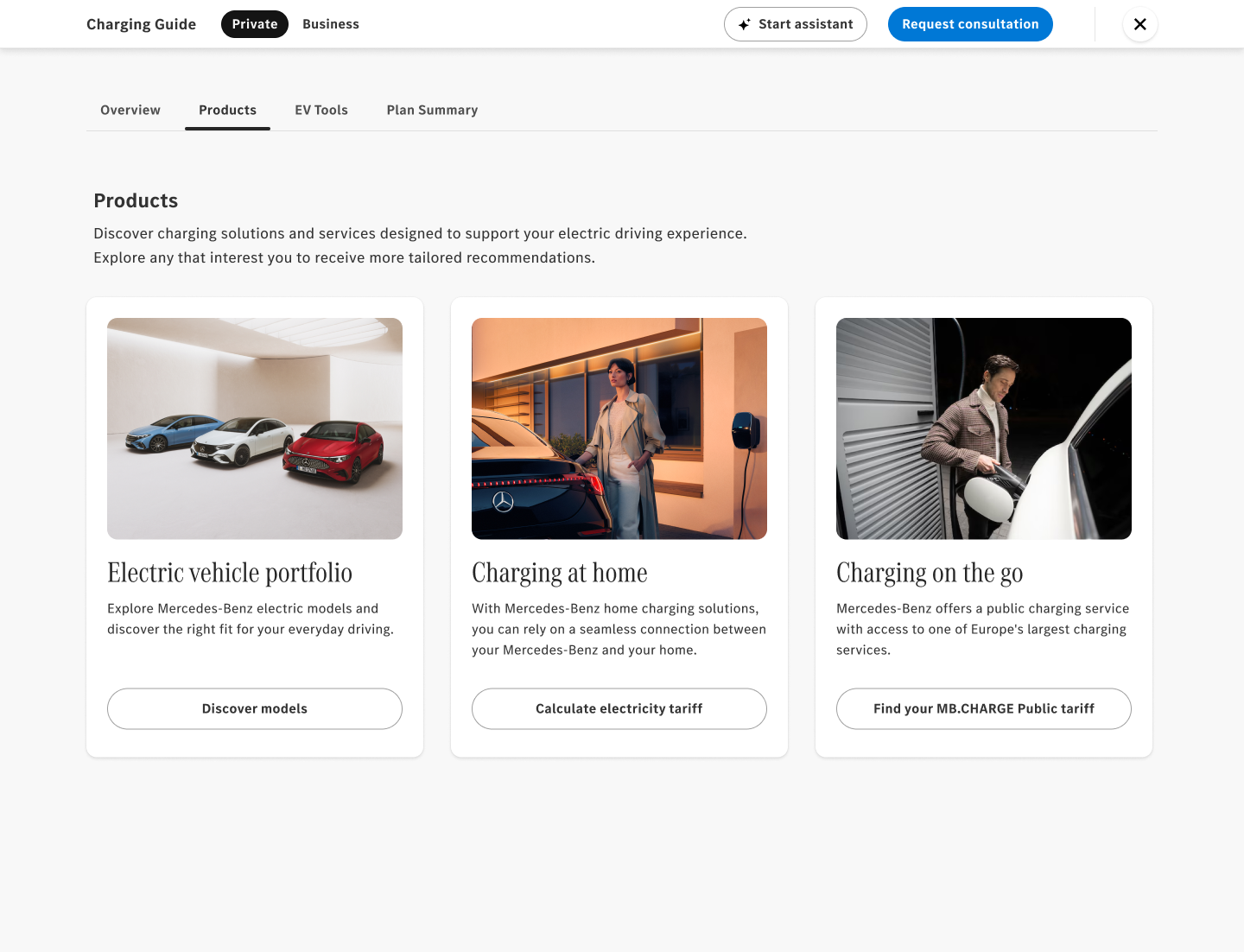
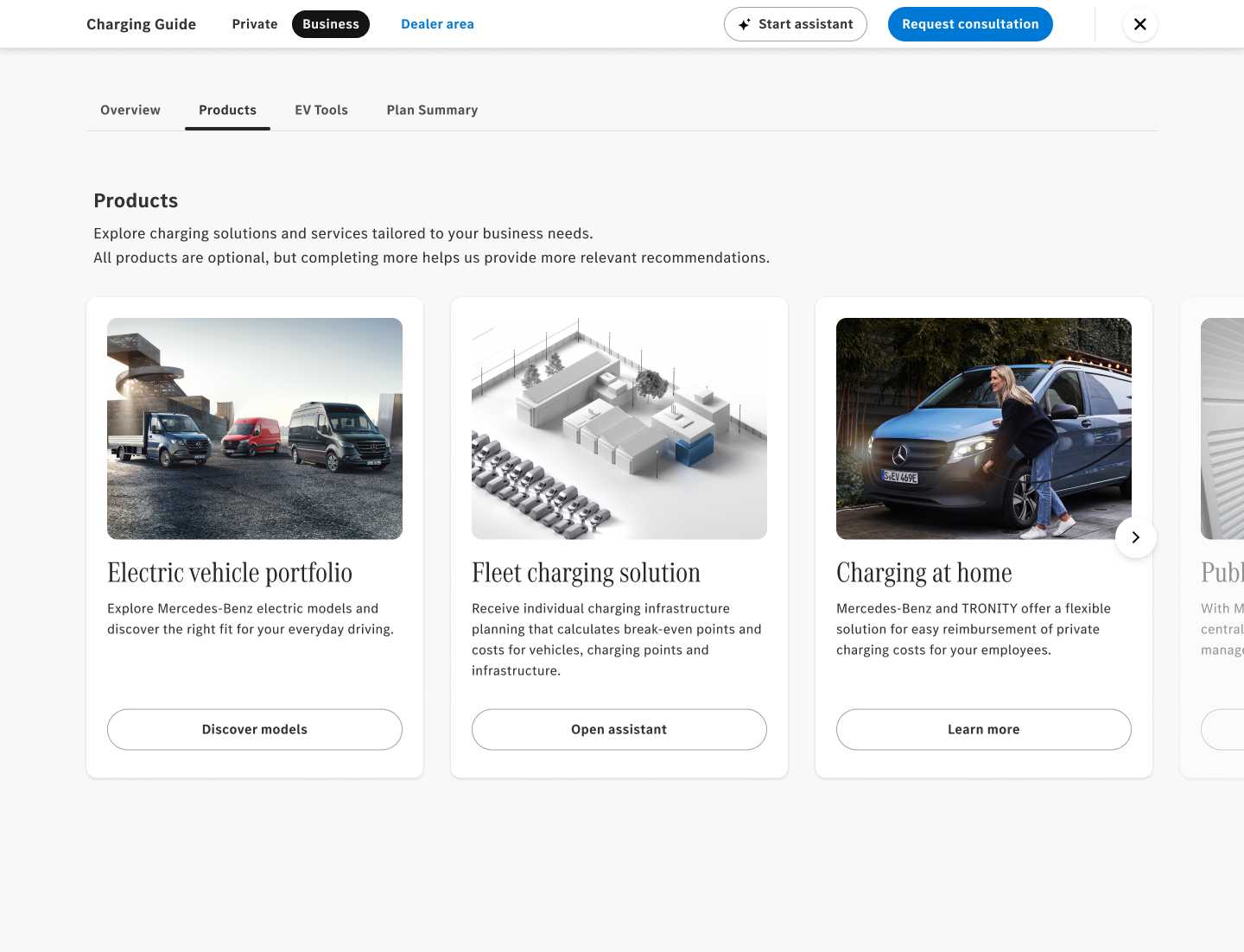
Create a structure that could grow
I designed the information architecture around broader product categories and journeys so new tools could be introduced without redesigning the whole experience.
04
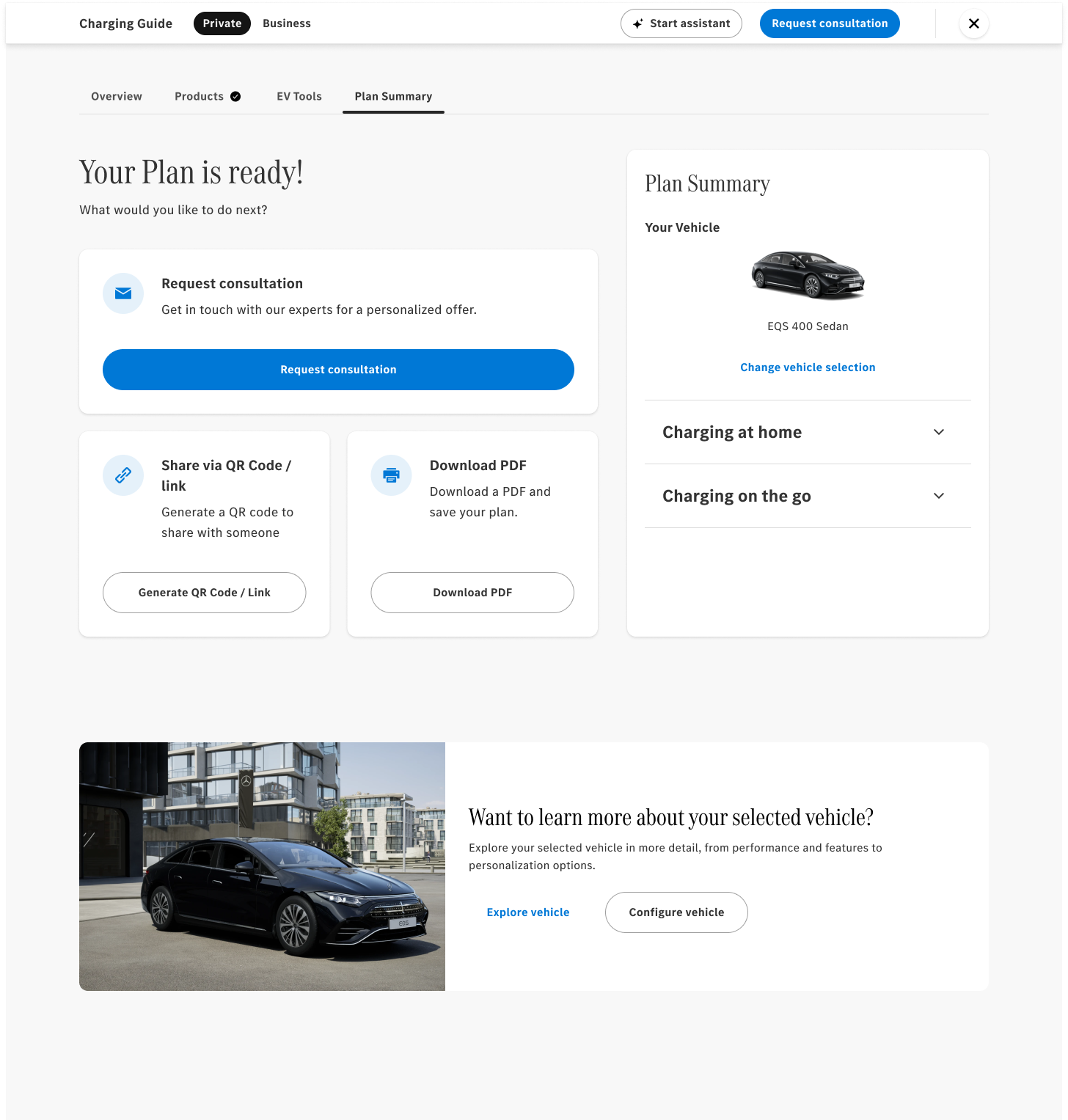
Make the plan a destination
The Plan Summary became the place where users could review what they had selected and understand what they could do next.
The decisions that shaped the experience
Turning a collection of tools into a connected planning journey.
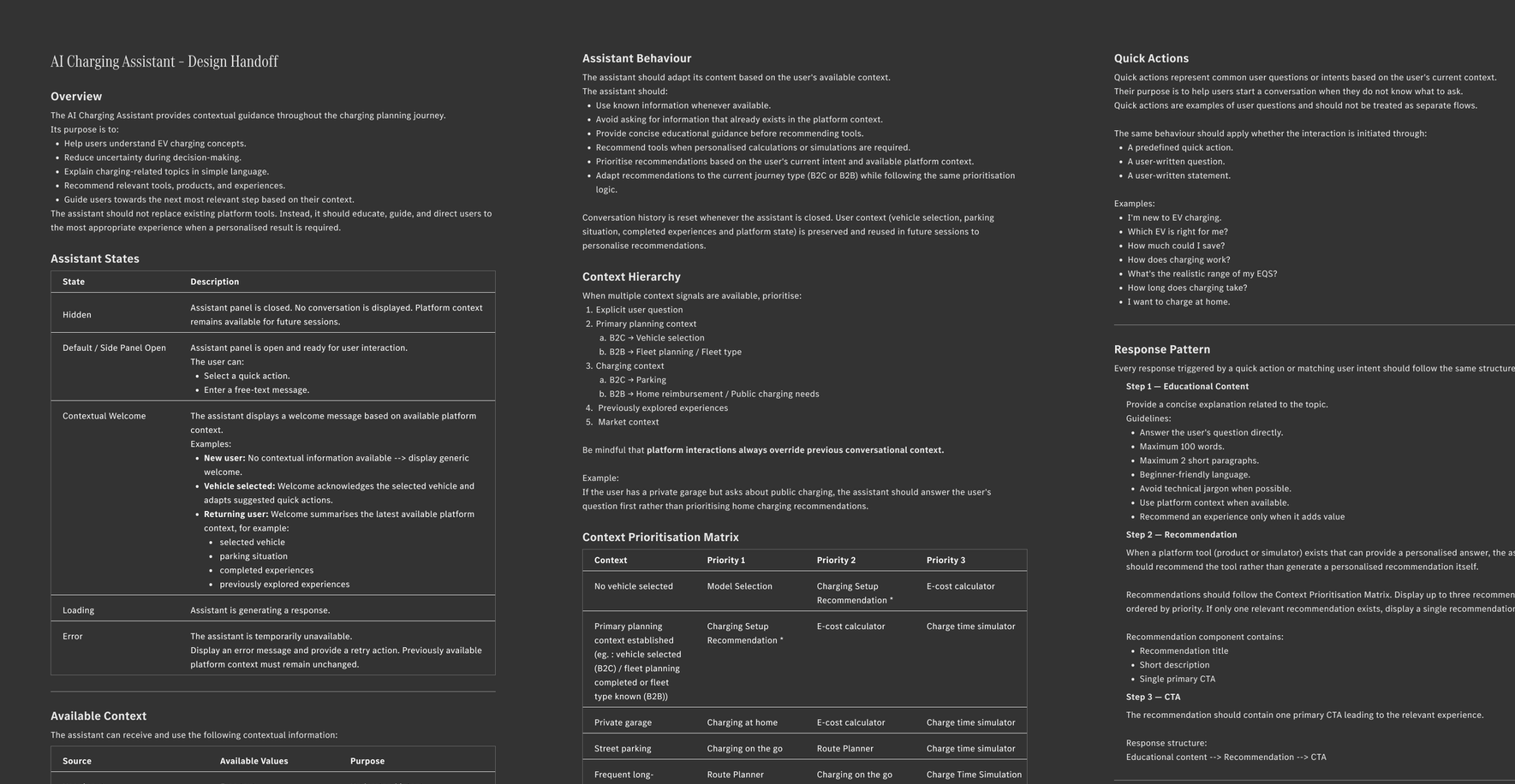
Designing the AI Assistant from scratch
From a questionnaire concept to a contextual product experience
The AI Assistant started as a response to a fundamental problem: how could we guide users through a complex charging ecosystem without forcing everyone through the same journey?
The challenge was not simply to add a chatbot.
It needed to have a clear role within the product:
When should users use it?
What can they ask?
What information does it need?
How does it connect to the products?
Why is a recommendation being made?
What should users do next?
I explored how conversational guidance could complement, rather than replace, the structured product experience.
The principle
The Assistant should help users navigate complexity, not create another layer of complexity.
Initial concept
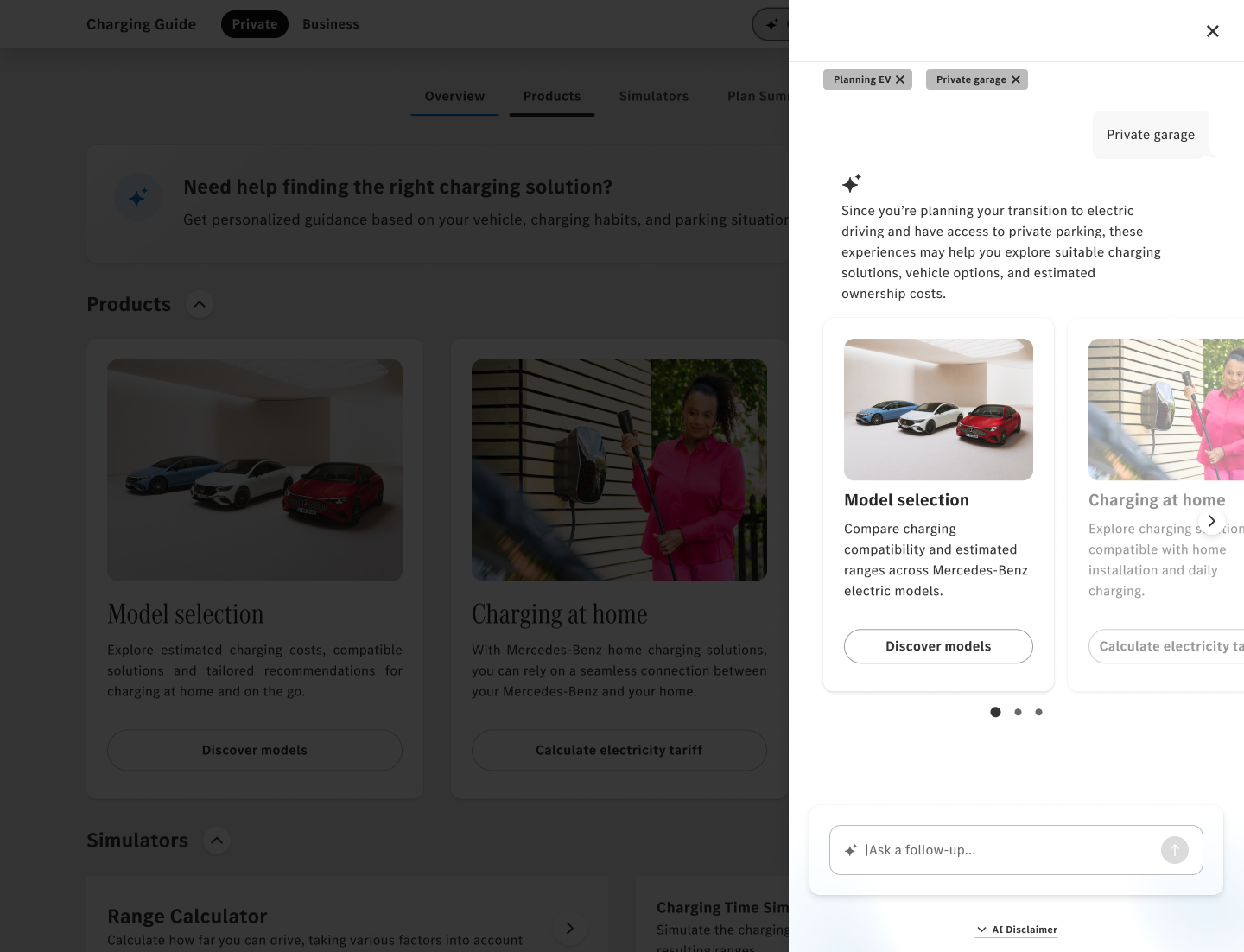
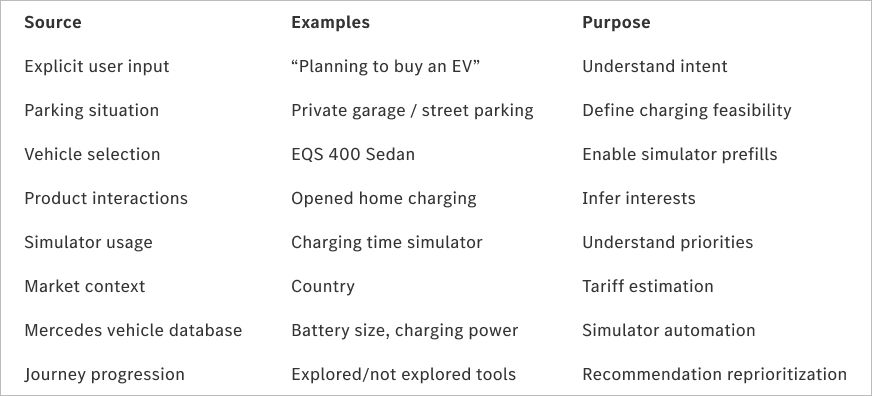
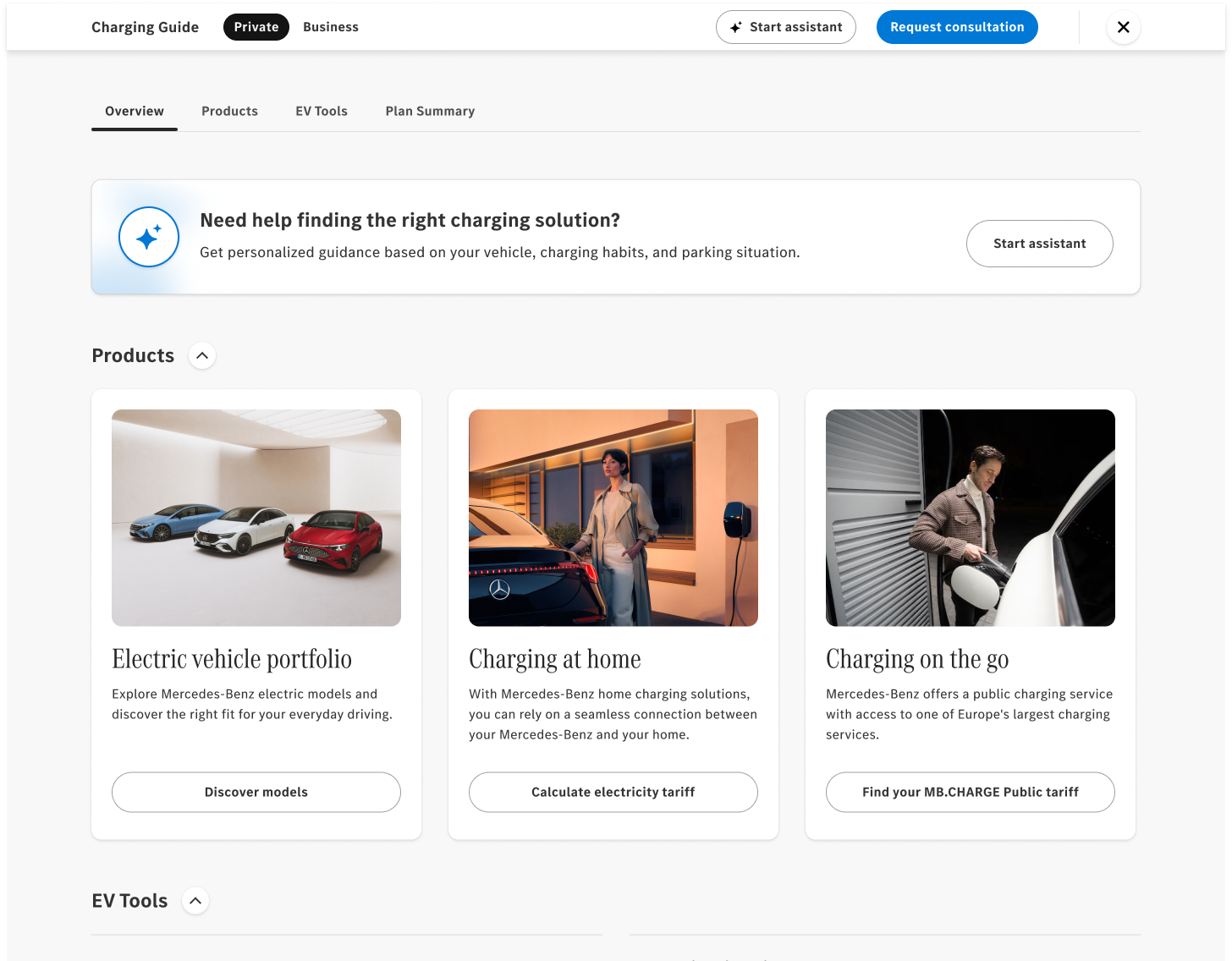
Final concept
Benchmark
Explore comparable approaches to complex decision-making and guided experiences.
Identify patterns
Compare navigation, product discovery, conversational interfaces and recommendation models.
Generate hypotheses
Explore alternative approaches before narrowing down the design direction.
Challenge assumptions
Use different perspectives to question early design decisions.
Using AI to expand the design process
AI was used as a design accelerator, not as a substitute for product judgement.
I also used AI during the design process to accelerate benchmarking and explore patterns across comparable digital experiences.
I used it to:
The output was treated as input to the design process, not as validated research.
Final decisions were grounded in product context, user evidence, technical constraints and stakeholder alignment.
Creating a structure that could grow with the product
The eCharging Planner already brought together multiple tools, but the ecosystem was expected to grow.
I therefore designed the architecture around reusable structures rather than individual features.
Designing for today's ecosystem without blocking tomorrow's
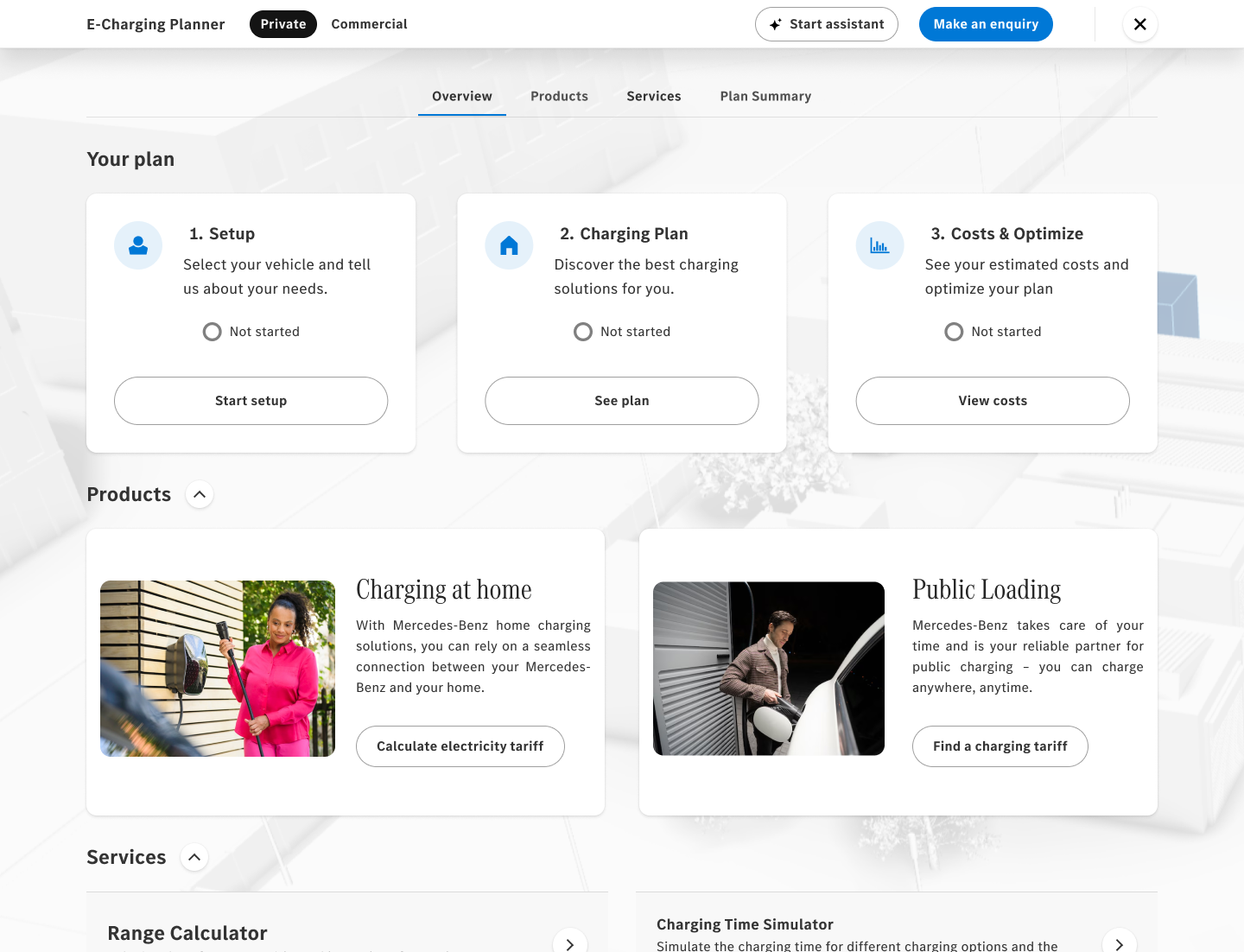
Products
Vehicle and charging solutions
Simulators
Tools that help users understand specific charging scenarios
Guided journeys
Journeys that help users make decisions
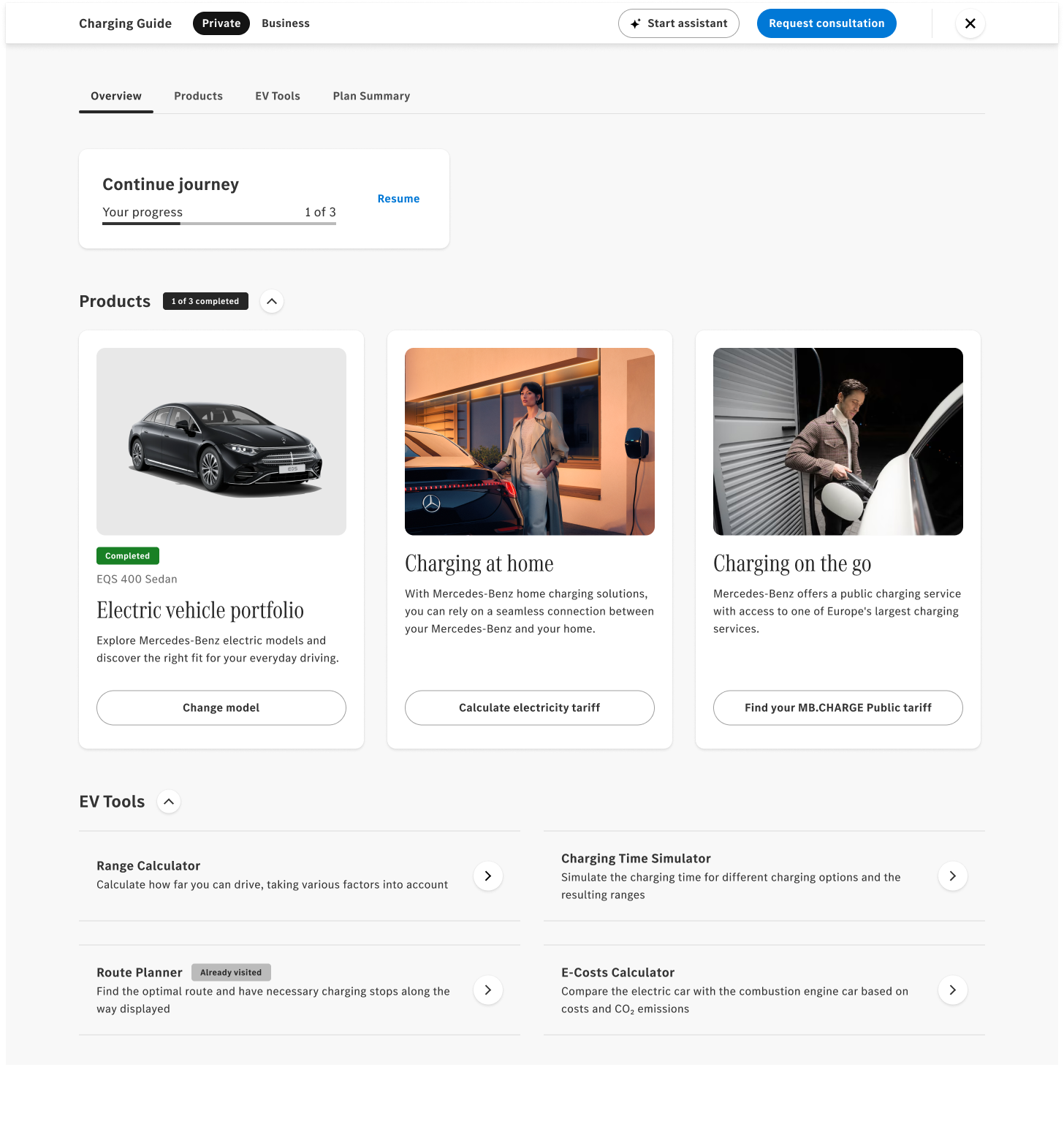
AI Assistant
Contextual support across the experience
Plan Summary
A persistent destination for reviewing and continuing the plan
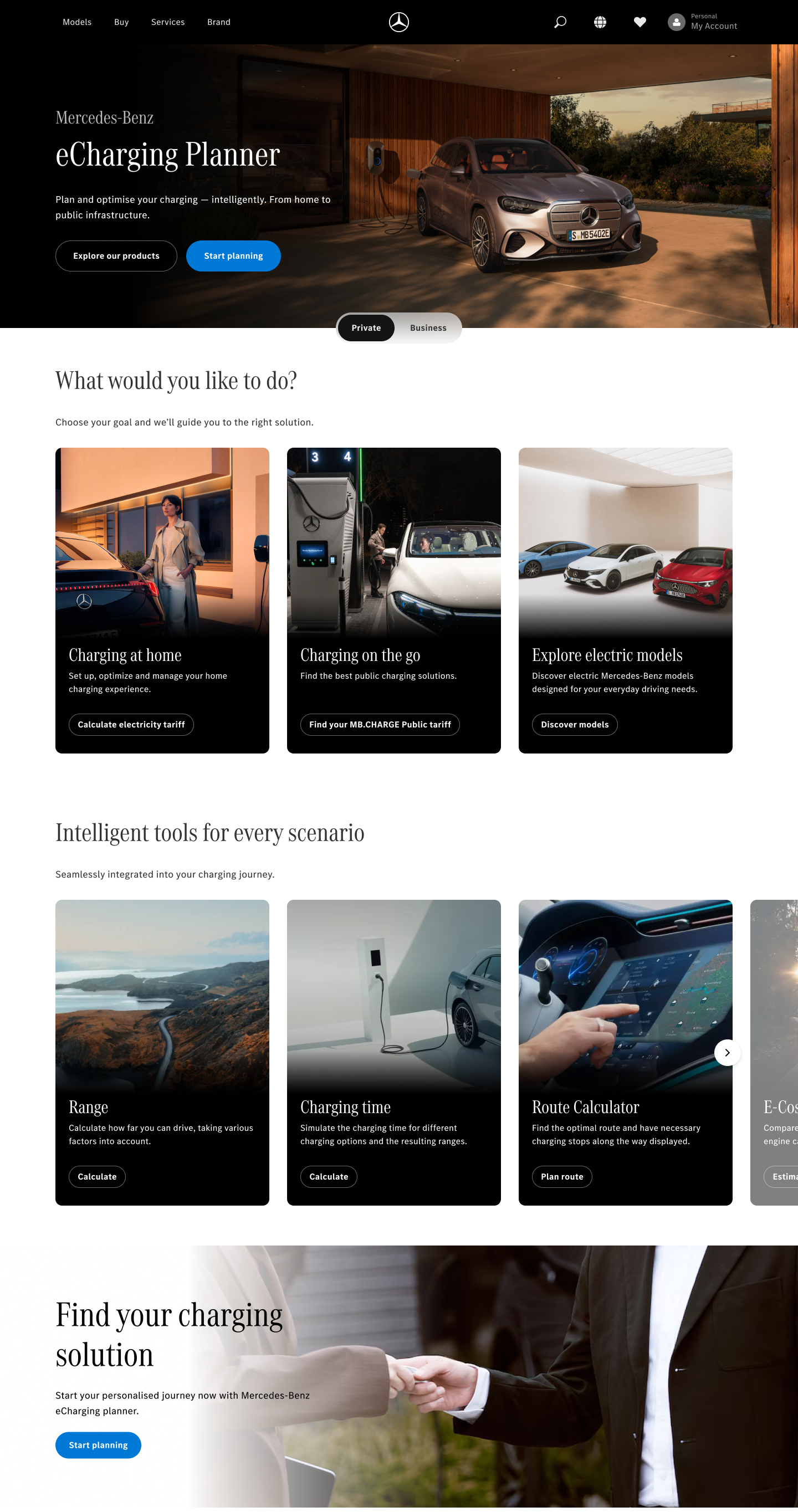
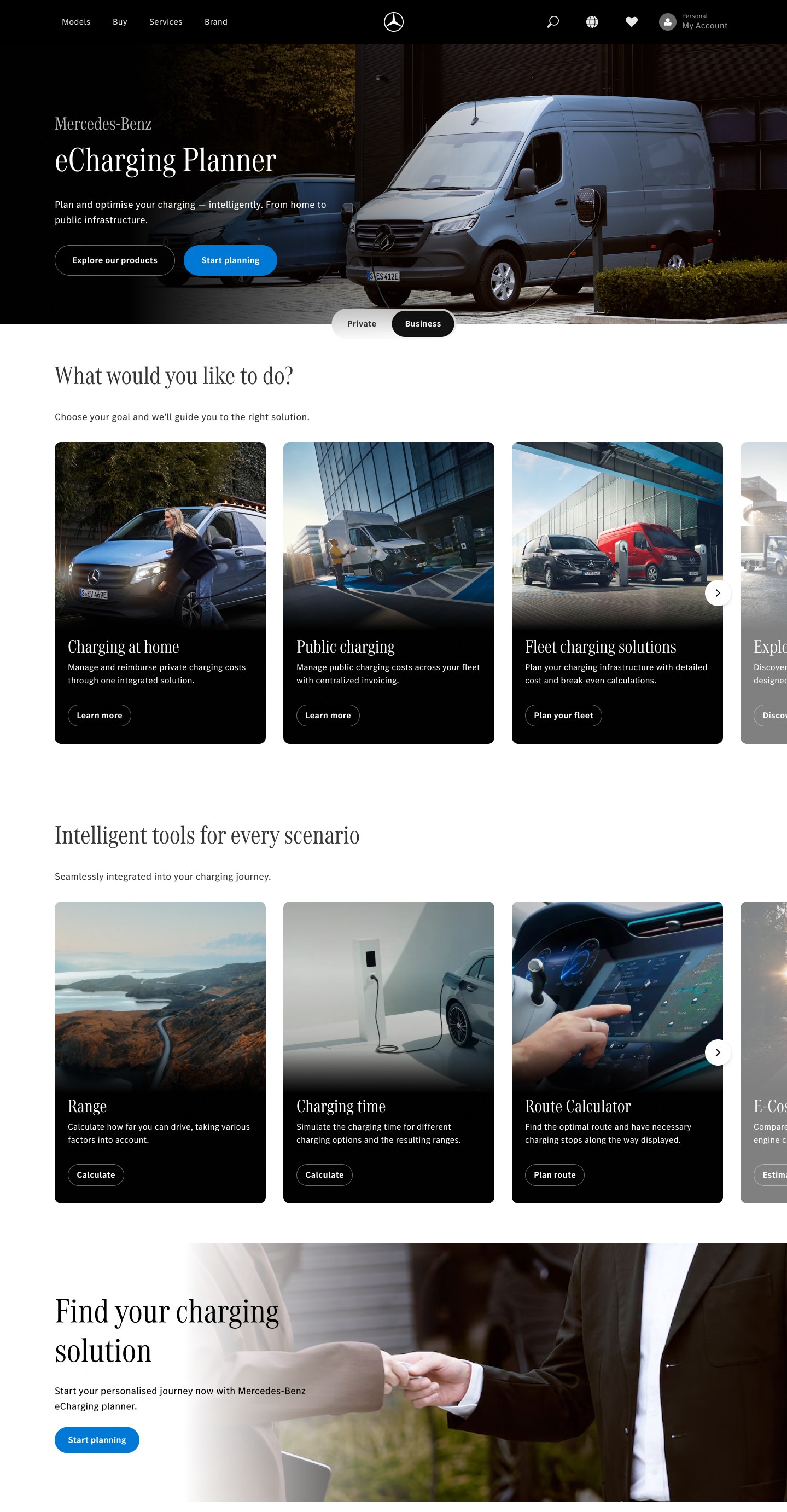
Designing beyond a single audience
Different users can enter with different questions
A fleet manager may need to understand infrastructure requirements.
A driver may simply want to understand charging at home.
Another user may want to compare tariffs or understand costs.
The experience therefore couldn't depend on one linear journey.
I designed the structure to support multiple entry points while maintaining a coherent underlying model.
The challenge was balancing:
Freedom to explore with Guidance to progress
What we learned from early user exploration
An exploratory Think Out Loud study revealed where the experience could evolve next
Before the public showcase, the Customer Insights team conducted an exploratory unmoderated Think Out Loud study with 14 participants.
The findings were directional rather than validated measures, but they highlighted several recurring opportunities.
eCharging Planner understanding
Users understood the broader EV charging context, but the specific role and scope of the eCharging Planner was not always immediately clear.
Planning journey
Users could complete individual steps, but the connection between them was not always obvious.
Plan Summary
The destination was available, but not always perceived as the obvious place to review the completed plan.
AI Assistant
Only 2/14 participants mentioned it spontaneously, while 8/14 discovered it when prompted.
This pointed towards an opportunity to improve its discoverability and contextual relevance.
What changed after validation?
The research surfaced opportunities around:
clarifying what the eCharging Planner does
making entry points more understandable
strengthening transitions between planning steps
clarifying what a charging plan includes
improving Plan Summary discoverability
making the AI Assistant more contextual
explaining tariff differences more clearly
Not all recommendations were implemented or prioritised before the IAA.
Instead, they became input for the product's next evolution.
The study didn't tell us the product was finished. It showed us where to take it next.
From concept to public showcase
Three months later, the eCharging Planner was presented at IAA Transportation.
The project moved from concept to public showcase within the three-month timeframe.
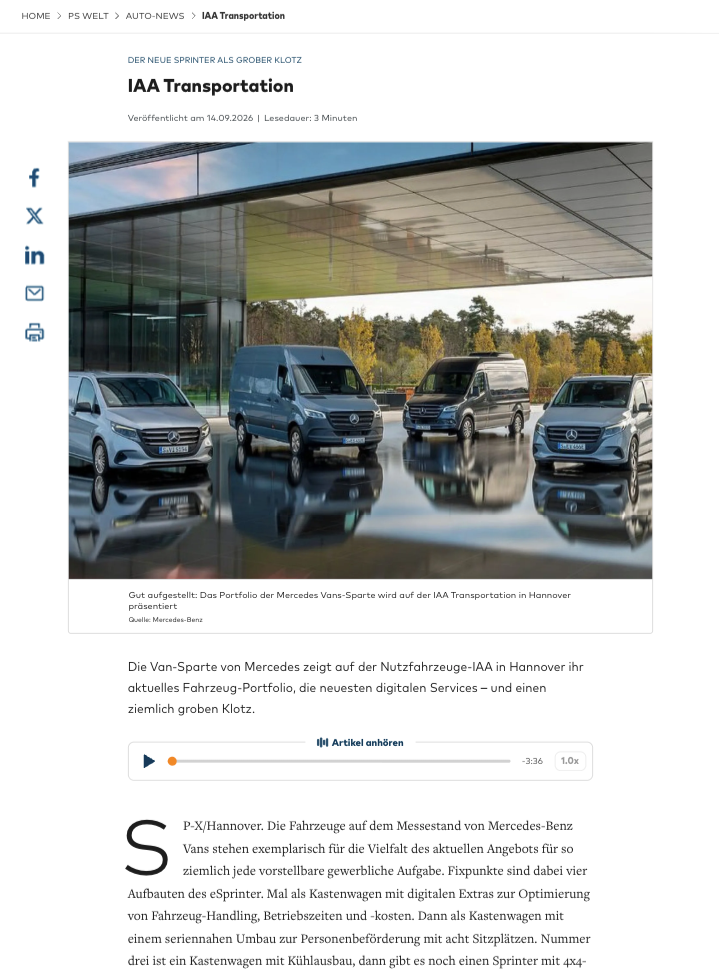
The eCharging Planner was presented as part of Mercedes-Benz Vans' digital ecosystem at IAA Transportation and was also featured by WELT in its coverage of the event.
WELT described the eCharging Planner as a planning and diagnostic solution that can analyse future fleet electricity needs, assess power supply and recommend charging infrastructure.
The product had moved from an internal concept to something being demonstrated publicly to customers, partners and industry stakeholders.
What I learned
01
Product design sometimes means challenging the brief
The most valuable contribution was not always designing the requested solution. Sometimes it was questioning whether the requested solution addressed the underlying problem.
02
Constraints can create better product decisions
The three-month deadline forced prioritisation and made alignment an essential part of the design process.
03
Complex ecosystems need a strong mental model
When products, tools and services come together, information architecture becomes part of the product strategy.
04
AI experiences need a clear reason to exist
An AI Assistant shouldn't simply be added because AI is available. Its value comes from helping users solve problems that are difficult to solve through static interfaces alone.
The takeaway
Designing the product meant designing the decisions around it.
The eCharging Planner challenged me to move beyond screen-level design and take ownership of how a complex ecosystem should work as a product.
I challenged the initial direction, helped evolve the concept from an embedded experience into a standalone platform, transformed a questionnaire concept into an AI Assistant, created the underlying information architecture and worked across Product, Business, Engineering and Design Leadership to bring the experience to a public showcase within three months.
The first release established the foundation.
The research that followed showed where that foundation can evolve into an even clearer, more contextual planning experience.